
McIntosh County Arrest Records and Charges
McIntosh County arrest records are law-enforcement or jail-side records tied to the arrest, intake, booking, custody, and initial charge entry. Research did not locate an official McIntosh County Sheriff's Office online inmate search, jail roster, or mugshot database. The official sheriff site was in update mode, and the Georgia Department of Corrections jail page listed only the jail location and phone. Current county-jail custody questions should go to McIntosh County Jail at 714 Highway 251, Darien, GA 31305, phone (912) 537-6622, or the Sheriff's Department at 912-437-6623.
Court charges after arrest are different. After an arrest, the prosecutor decides what formal charges to file and those charges become part of the court record. Felony matters route toward Superior Court and the Atlantic Judicial Circuit District Attorney. Misdemeanor and traffic matters may route through State Court. First appearances, warrants, and preliminary matters can involve Magistrate Court. The full prosecution file, including pleas, disposition, and sentence, belongs with McIntosh County criminal court records.
The Georgia Department of Corrections homepage is a successful manifest image source assigned to McIntosh County arrest and charge records.
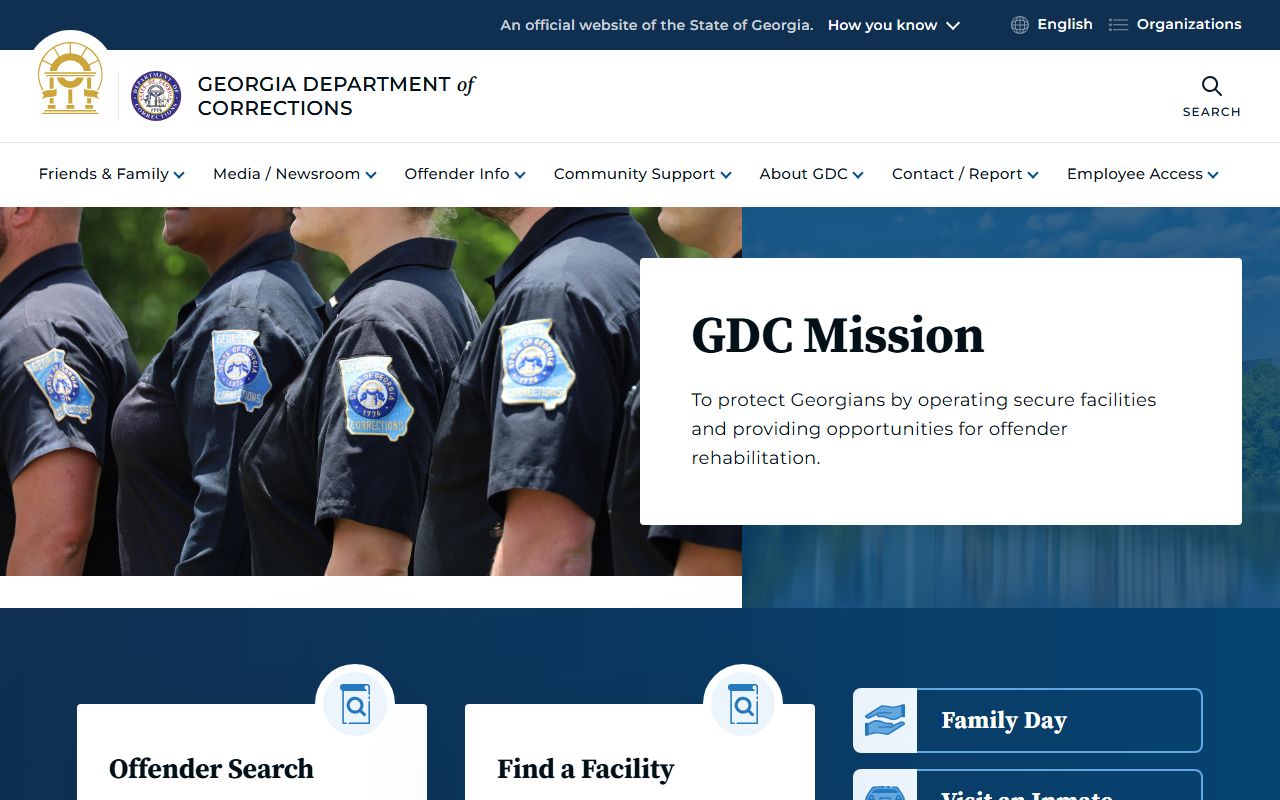
GDC is useful for sentenced state-offender context, but county arrest records and current jail custody should still be verified through McIntosh County jail or sheriff channels.
Find McIntosh County Arrest Records
The official access path starts with the agency that has the record. For a fresh arrest, current custody, bond, property, visitation, or release status, call the jail or Sheriff's Department. For a filed charge, court date, disposition, sentence, or certified criminal document, contact the Clerk of Superior Court at (912) 437-6641. For prosecutor decisions, felony charges, and many record restriction matters after July 1, 2013 arrests, the Atlantic Judicial Circuit District Attorney is the relevant prosecution office.
- Start with the arrest side if the question is custody, booking, bond, jail location, release, or arresting agency.
- Move to the court side if the question is what charge was filed, whether it was amended, or how the case ended.
- Use the defendant's full name, date of birth, arrest date, agency, case number, citation number, or court date when available.
- Ask whether the record is public, active-investigation material, juvenile/confidential, sealed, or restricted.
- For traffic citations, check whether the McIntosh State Court FivePoint portal can locate the citation by ticket number or driver's license number.
Georgia does not publish one statewide public active-warrant or arrest-charge database for ordinary users. The GDC offender query is for sentenced state offenders after transfer to state custody, not a county arrest roster. The GBI sex offender registry is a separate official registry. DDS records show driver-history consequences after court-reported traffic convictions, not the whole arrest or court file.
Charging Documents After Arrest
The charge record begins when the government files a charging document or the court records the formal offense. The exact document depends on the type of case and stage. Research for McIntosh County identifies criminal records that can include accusations, indictments, bond orders, arraignment entries, motions, plea forms, sentencing orders, probation conditions, and disposition entries. A single arrest can produce one charge, many counts, amended charges, or no filed charge after review.
| Document | Who Uses It | How It Fits the Record |
|---|---|---|
| Complaint | Law enforcement, prosecutor, or court intake process depending on case type. | Often describes the alleged offense and can start early court action. |
| Accusation or information | Prosecutor. | A prosecutor-filed charging document often used for misdemeanor or non-indictment prosecution. |
| Indictment | Grand jury and prosecutor. | A formal felony charging document, commonly tied to Superior Court prosecution. |
The Georgia GDC offender query is another successful image source assigned in the manifest.
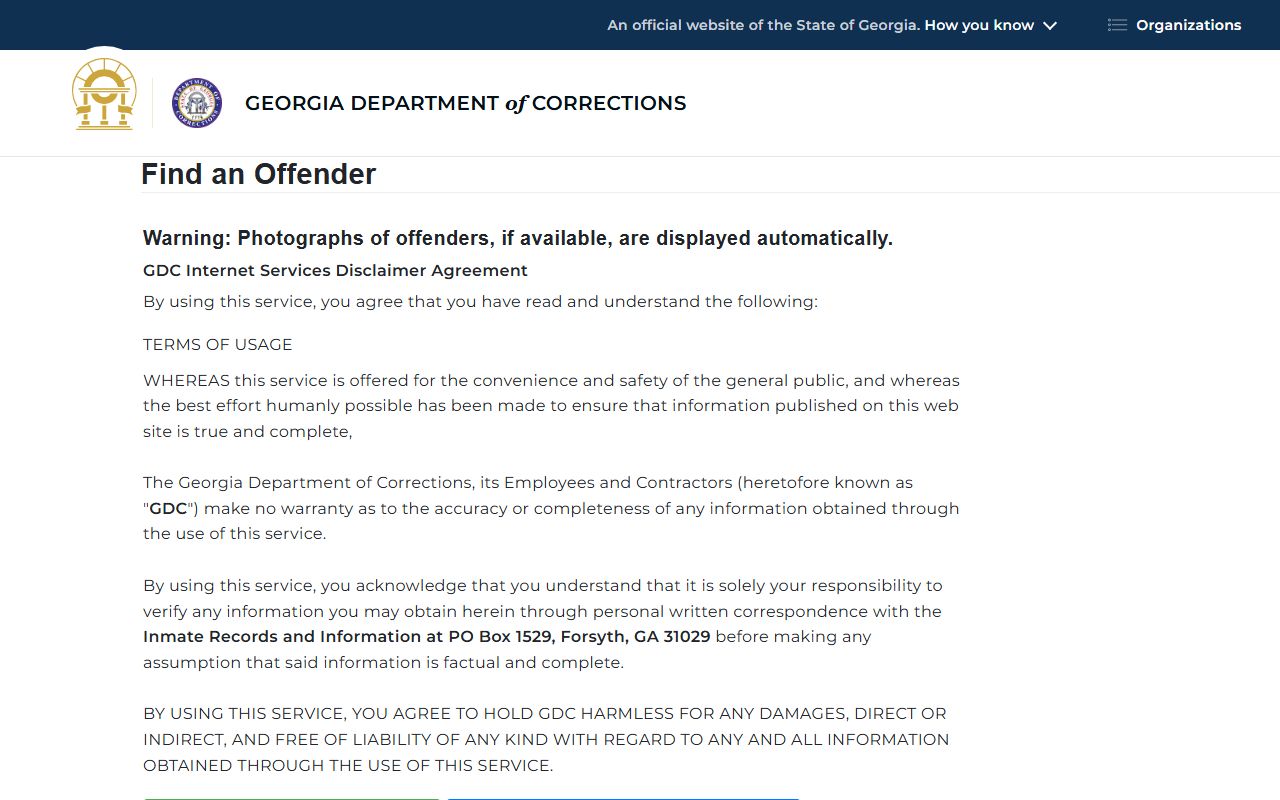
The offender query can help after state sentencing, but it does not replace the McIntosh County court charge record or the local arrest record.
McIntosh County Charge Status
Charge status can change many times. A charge may begin as a booking allegation, then be filed differently by the prosecutor. It may be amended to a different count, reduced through negotiation, dismissed by the court, or ended by nolle prosequi. That is why charge records should be read with the latest docket entry, not only the original arrest or booking text. For each charge, look for the current status, disposition, sentence, and whether any restriction or sealing order applies.
| Status | What It Means | What to Check Next |
|---|---|---|
| Pending | The charge has not reached final disposition. | Next court date, bond terms, motions, and clerk docket updates. |
| Amended | The charge wording, count, severity, or statute has changed. | The latest charging document and any plea paperwork. |
| Reduced | The charge was lowered to a lesser offense or severity level. | Disposition and sentence for the reduced charge. |
| Dismissed | The charge or case ended without that count proceeding to conviction. | Whether dismissal was with or without prejudice and whether restriction is available. |
| Nolle prosequi | The prosecutor chose not to pursue the charge at that time. | Case-specific restriction eligibility and any remaining counts. |
| Convicted | The charge resulted in a guilty or conviction-level outcome. | Sentence, probation, fines, costs, restitution, and collateral consequences. |
Charges vs Convictions
An arrest charge is not a conviction. The court record can show accusations that were later changed, dismissed, dropped, or resolved through a plea to another count. A conviction is a court outcome based on a verdict or plea. This distinction is important for McIntosh County arrest records because an arrest entry may be much older than the formal case outcome, and a booking charge may not match the final charge language in the clerk's file.
| Charge | Conviction | |
|---|---|---|
| Meaning | An allegation or filed offense. | A final court outcome after plea or verdict. |
| Where found | Booking record, charging document, docket, or case file. | Disposition entry, judgment, sentencing order, or DDS/GDC consequence where applicable. |
| Can change | Yes, it may be amended, reduced, dropped, or dismissed. | It can be appealed or later restricted/sealed only under specific rules. |
| How to verify | Check the newest court docket and prosecutor-filed document. | Check disposition, sentence, and certified court copy. |
DA Role in Court Charges
The District Attorney for the Atlantic Judicial Circuit serves Bryan, Evans, Liberty, Long, McIntosh, and Tattnall counties. The DA decides whether and how to prosecute felony and many state-level criminal charges. The DA or prosecutor is also the contact point for many Georgia criminal-history restriction requests for arrests after July 1, 2013. The DA is not the public clerk for court copies, but prosecutor action shapes which charges appear in the criminal court record.
Atlantic Judicial Circuit District Attorney
945 E.G. Miles Parkway
Hinesville, GA 31313
(912) 876-4151
Fax: (912) 876-4305
The DA should not be used for routine certified copies. Those are clerk questions. The prosecutor becomes important when the issue is charge filing, prosecution decision, victim or witness contact, or statutory record restriction review.
State Charge Lookup Channels
Statewide systems answer different questions. GDC offender search can show sentenced state offenders. The GBI sex offender registry is the official statewide sex-offender lookup. DDS driver records show convictions, points, suspensions, and reinstatement steps after courts report qualifying traffic outcomes. None of these is a complete McIntosh County arrest records database, and none replaces a court docket or certified file from the Clerk of Superior Court.
The GBI sex offender registry landing page is a successful manifest image source for McIntosh County charge context.
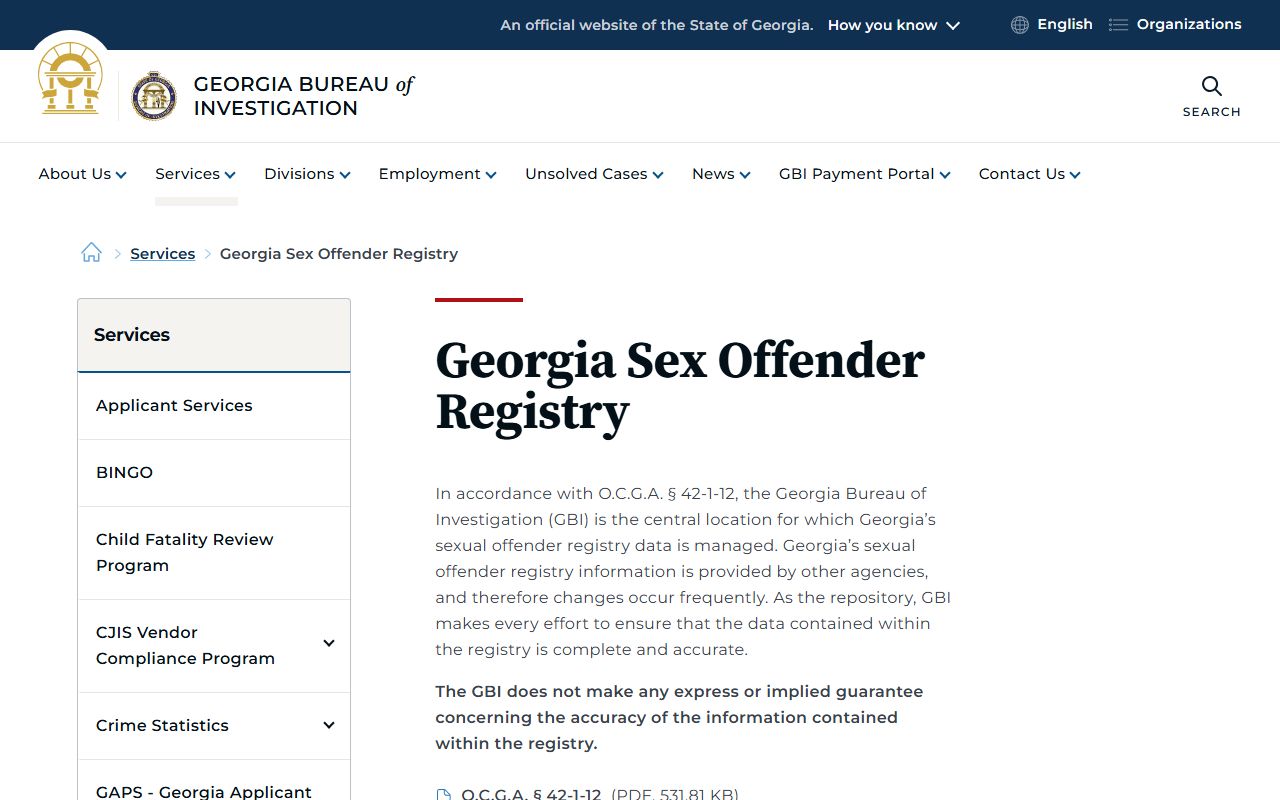
The registry is useful for a specific statutory registry search, but it should not be read as a general arrest or charge index.
The Georgia DDS online MVR portal is also assigned in the manifest.
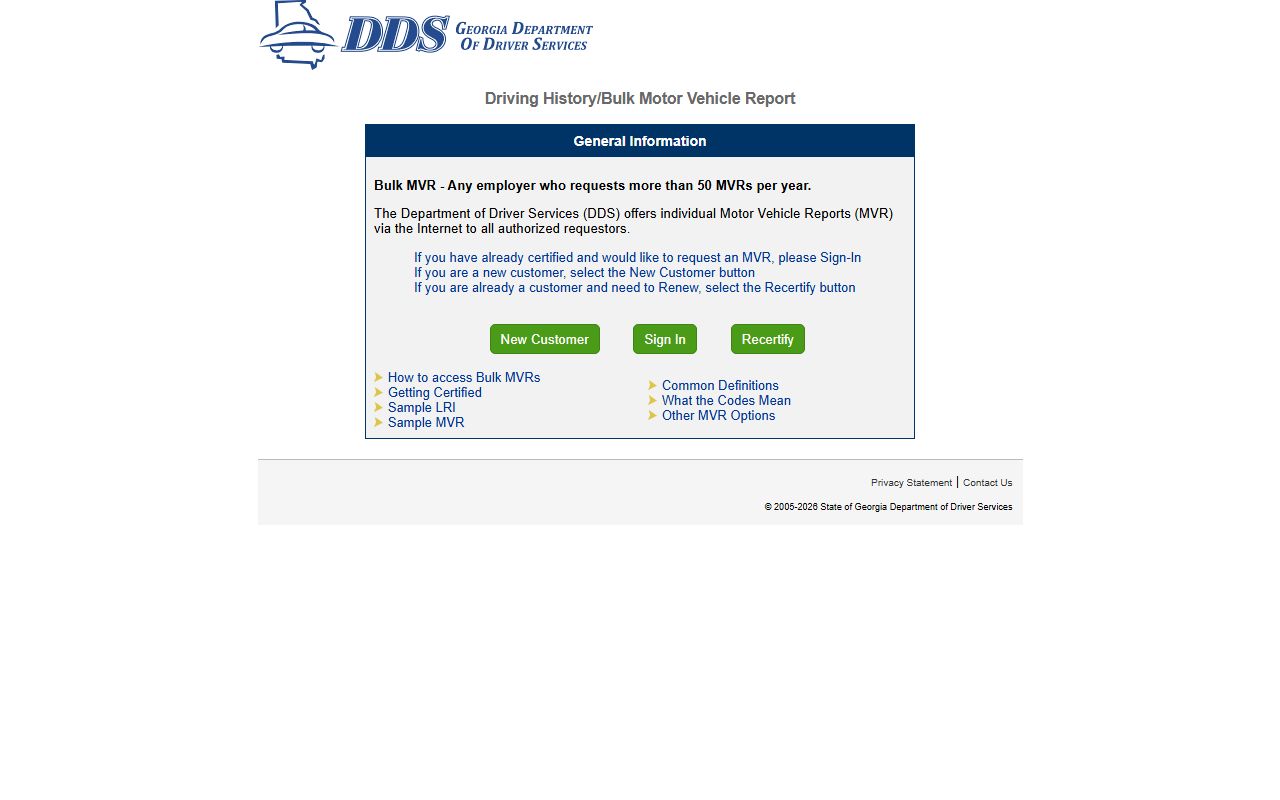
DDS MVR records are relevant when a charge is traffic-related and the court reports a conviction or disposition that affects the driver record.
Traffic Charges After Arrest
Traffic and citation records can support a charge search when the offense is handled through McIntosh County State Court or an issuing municipal court. The FivePoint portal accepts citation number or driver's license number for eligible McIntosh State Court citations. It shows payment stages and warns that citations may be available for payment two weeks before the court date shown on the citation. Payment may report a conviction to DDS when applicable, and Super Speeder consequences are handled separately by DDS after court payment.
Georgia Courts traffic guidance says there is no centralized Georgia traffic citation database. If a court uses a vendor, a person may be able to search by name, city or county of issuance, date of birth, and/or citation number. If a court date was missed, the person should contact the court directly. Online payment should not be assumed to clear a failure-to-appear issue or warrant without court confirmation.
Restricted Arrest and Charge Records
Georgia criminal-history restriction under O.C.G.A. § 35-3-37 can limit access to qualifying records, but eligibility is case-specific. For arrests after July 1, 2013, GBI guidance generally points the person to the prosecutor. For older arrests, the person may need to apply through the arresting agency. Court-file sealing can require a separate court process. Juvenile records, sealed warrants, adoption-related material, protected victim information, and some active-investigation material may be withheld or restricted.
| Sealed Court File | Restricted Criminal History | |
|---|---|---|
| What it limits | Public access to a court file, entry, or document. | Public criminal-history access for covered non-criminal-justice purposes. |
| Main contact | The court where the case was filed. | Prosecutor, arresting agency, and GBI process depending on date and result. |
| What it does not mean | It may not erase all agency records. | It does not automatically seal every court document. |
The Georgia DDS violations, suspensions, and revocations page is the final successful manifest image source assigned here.
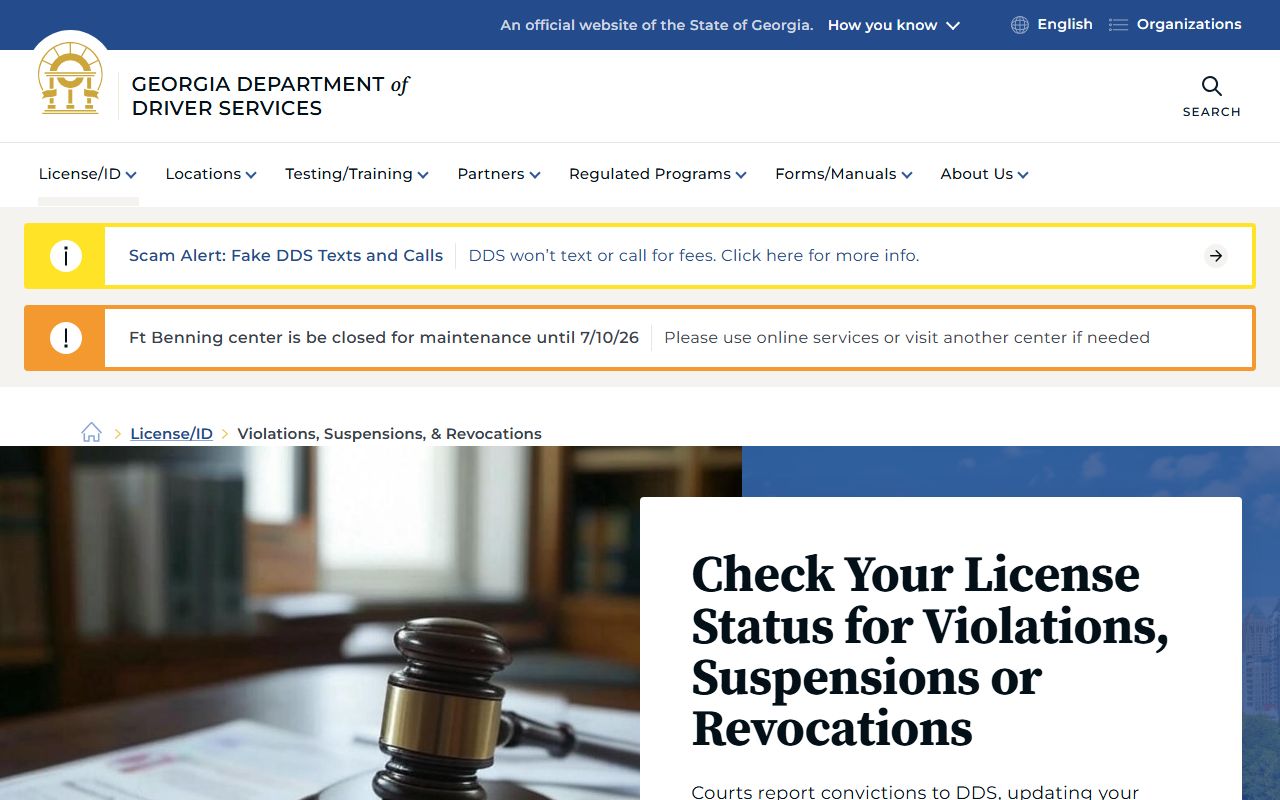
Traffic-related charges can have driver-license effects even when the court file and the driver record are kept by different agencies.
Verify McIntosh County Charges
Official verification depends on the question. For custody and booking, call the jail or Sheriff's Department. For filed charges, docket entries, dispositions, and certified court copies, contact the Clerk of Superior Court. For prosecutor decisions and many post-2013 restriction questions, contact the Atlantic Judicial Circuit District Attorney. For sentenced state-prison status, use GDC. For registry status, use GBI. For license consequences after a traffic conviction, use DDS.
Do not rely on third-party arrest sites as the source of truth. They may mix old arrest entries with dismissed charges, may omit later dispositions, and may not show Georgia restriction or sealing changes. A charge should be checked against the latest court record, and a conviction should be confirmed by the disposition or sentencing order. When a certified record is needed for court, licensing, immigration, employment review, or personal correction, request it from the originating court or agency.
Note: McIntosh County arrest records and court charge records answer related questions, but each has a different official custodian.