
McIntosh County Criminal Court Records
A criminal court record begins when a charge is filed with a court and the court opens or tracks a criminal case. In McIntosh County, the Clerk of Superior Court manages Superior, State, and Juvenile Court records. Superior Court handles felony and serious criminal matters as the general jurisdiction trial court in the Atlantic Judicial Circuit. State Court handles misdemeanor, traffic, and citation matters identified through the McIntosh County State Court payment portal. Juvenile matters are part of the court system but are often confidential by law.
The criminal case file is broader than the arrest or first charge. It can include the accusation or indictment, bond orders, arraignment entries, motions, plea paperwork, hearing notices, trial entries, verdict, disposition, sentencing order, probation conditions, restitution, fines, costs, and later modification or revocation activity. For the narrower arrest-to-charge path, use the McIntosh County arrest records and court charges workflow. For all civil, family, probate, traffic, and clerk records together, use the broader court records channel.
The Atlantic Judicial Circuit District Attorney homepage is one successful criminal-records image source assigned in the manifest.

The DA source is relevant because the prosecutor decides whether and how many felony and state-level criminal charges are pursued in court.
Search McIntosh County Criminal Cases
McIntosh County does not have an official countywide, no-login criminal case portal in the research sources reviewed. The Clerk of Superior Court is the starting point for Superior Court felony records and State Court misdemeanor records. The office is listed at 310 North Way, P.O. Box 1661, Darien, GA 31305, phone (912) 437-6641, fax (912) 437-6673. Ask whether the file is public, sealed, juvenile/confidential, archived, or available only by in-person inspection.
- Identify whether the case is Superior Court felony, State Court misdemeanor or traffic, Juvenile Court, Magistrate first-appearance matter, or municipal citation matter.
- Gather the defendant's full name, approximate arrest or filing year, case number if known, charge name, and court date if available.
- Call or visit the Clerk of Superior Court for Superior and State Court criminal file and docket questions.
- Ask for the docket, disposition, sentencing order, or certified copy needed rather than asking for a broad background search.
- For criminal-history restriction questions, confirm the arrest date and prosecutor because Georgia rules differ for older and newer arrests.
PeachCourt may be relevant to e-filed or document access where account permissions apply. Georgia Courts e-access is a provider directory and requires accounts at provider sites, but McIntosh was not visible in the captured e-access county list. The Georgia Department of Corrections offender query is a sentenced-offender channel, not a McIntosh County criminal court docket.
McIntosh County Criminal Case Flow
A criminal court record changes as the case moves. The case may start with an arrest, citation, warrant, accusation, indictment, or other charging document. A judicial officer may handle bond or first appearance. The case then moves through arraignment, pretrial motions, plea negotiations, trial settings, and final disposition. If there is a conviction or qualifying plea, sentencing entries can add jail, prison, probation, fines, costs, restitution, treatment conditions, or license consequences for traffic-related cases.
Case flow: Charges Filed › Arraignment › Pretrial / Motions › Plea or Trial › Disposition › Sentencing
| Stage | What Happens |
|---|---|
| Charges filed | The prosecutor or grand jury files the formal charge record, such as accusation or indictment. |
| Arraignment | The defendant is formally addressed on the charge and a plea may be entered. |
| Pretrial / motions | Lawyers file requests, evidentiary motions, continuances, or other matters before plea or trial. |
| Plea or trial | The case resolves by plea, bench or jury trial, dismissal, or other disposition. |
| Disposition | The court records the outcome for each charge, including guilty, not guilty, dismissed, nolle prosequi, or other result. |
| Sentencing | The judge imposes jail, prison, probation, fines, costs, restitution, or other conditions when applicable. |
McIntosh County Criminal Record Fields
Research did not locate a public no-login sample McIntosh criminal case record, so the field list should be used as an official-request inventory rather than a promise that every field appears online. The clerk can help identify what is in a public file, what must be redacted, and what is sealed or confidential. In many criminal court records, the most useful items are the charge list, docket entries, plea, disposition, sentence, and any order that changes a condition of release or probation.
| Field | What It Shows |
|---|---|
| Case number | The criminal file identifier used by the court and clerk. |
| Defendant | The person charged in the criminal case. |
| Court | Superior, State, Juvenile, Magistrate, or municipal court context. |
| Charges | The filed offenses, accusation, indictment, count numbers, and statute references when shown. |
| Bond or release | Conditions tied to release, bond, first appearance, or court supervision. |
| Plea | Guilty, not guilty, nolo contendere, or other recorded plea status. |
| Disposition | The result of each charge, such as convicted, dismissed, acquitted, dead docket, or nolle prosequi. |
| Sentence | Jail, prison, probation, fine, cost, restitution, or special condition imposed after conviction or plea. |
Charges vs Convictions
A McIntosh County criminal court record can show charges that did not become convictions. Charges may be amended, reduced, dismissed, dropped, or resolved by nolle prosequi. A conviction is a later court outcome based on a guilty plea, nolo contendere plea with conviction-like effect, or verdict. Reading only the first charge line can give a misleading view of the case, so the disposition and sentence fields should be checked for each count.
| Charge | Conviction | |
|---|---|---|
| Stage | An allegation filed in court. | A final court outcome after plea or verdict. |
| Proof level | Based on charging decision, probable cause, indictment, or accusation process. | Requires a plea or finding that supports judgment. |
| Record effect | May appear even if later dismissed or reduced. | Can trigger sentence, probation, fines, DDS reporting, or other consequences. |
| How to read | Check count, code, severity, and current status. | Check disposition, sentence, and any restriction or sealing order. |
The Atlantic Judicial Circuit DA team page is another successful source image assigned to this criminal-records page.
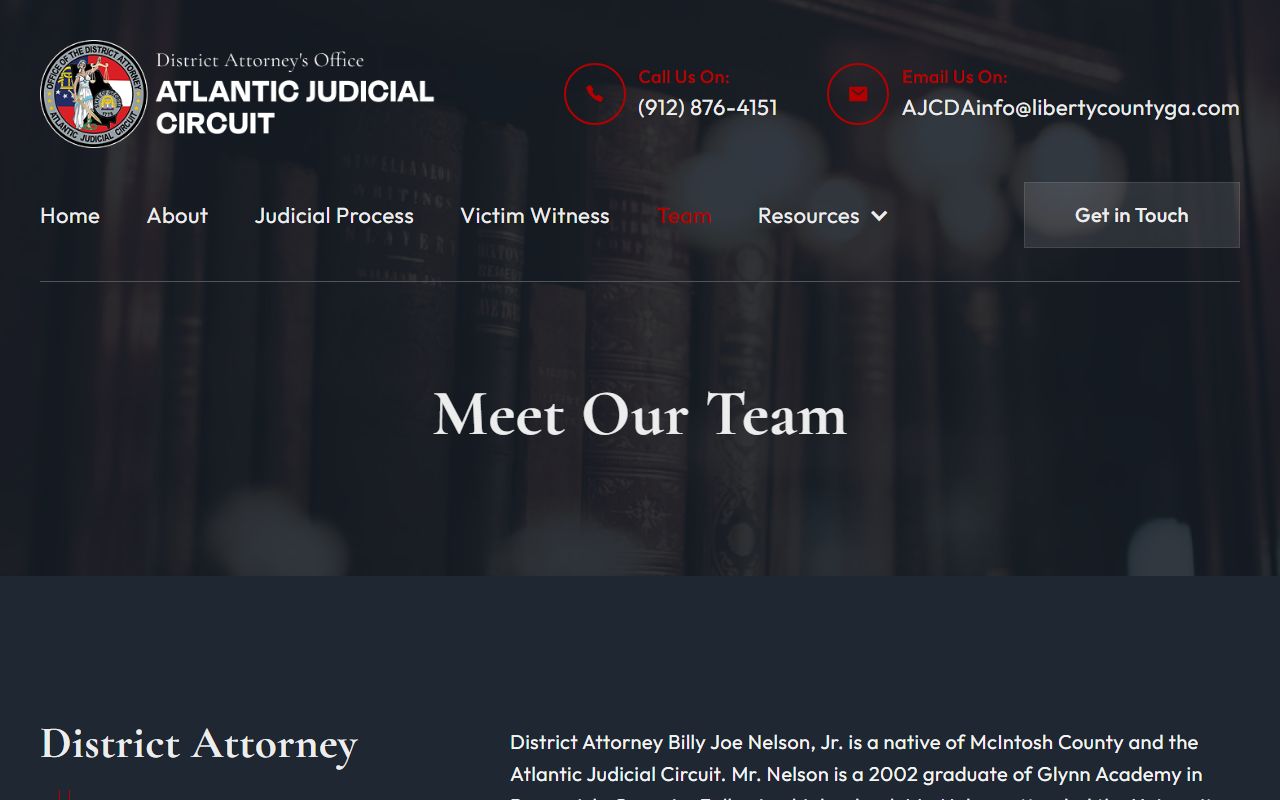
The DA team source supports the circuit-level prosecution structure that affects McIntosh County criminal cases.
Defense Access and Case Files
The public defender is not the records custodian, but defense access is part of the criminal case ecosystem. The Georgia Public Defender Council lists Circuit Public Defender Joshua Brockington for the Atlantic Circuit. The main office is at 201 South Main Street, Suite 2400, Hinesville, GA 31313, phone 912-369-6338, and the McIntosh satellite office is listed at 102 Madison Street, Darien, GA 31305, phone 912-437-3880. Defendants with active cases should use counsel for legal advice and case strategy, not a public records page or clerk staff.
The Georgia Public Defender Council Atlantic Circuit page is a successful manifest image source for McIntosh County criminal records.
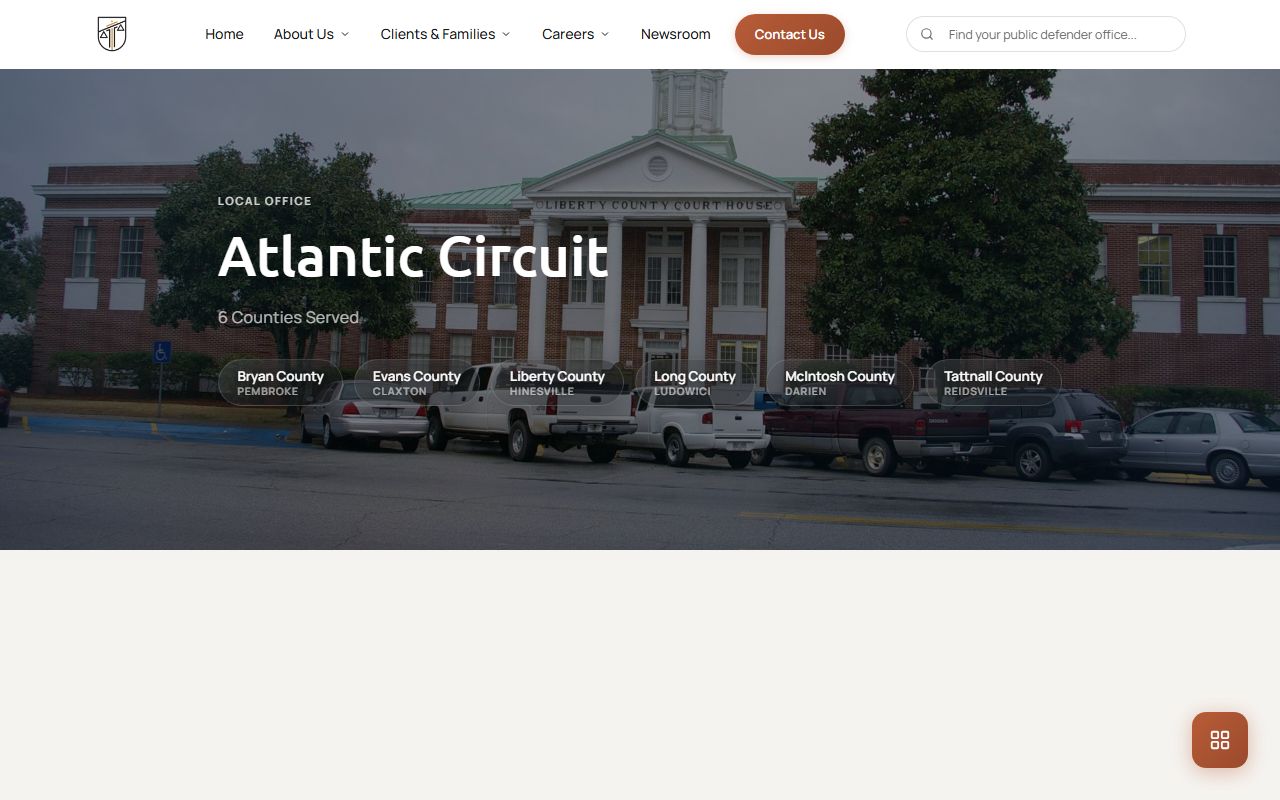
This source clarifies that indigent defense coverage is circuit-based and includes a McIntosh County satellite contact.
Sealed vs Restricted Records
Georgia commonly uses the term record restriction for many criminal-history access limits. It is not always the same as destroying a court file. GBI guidance explains that for arrests after July 1, 2013, the person generally contacts the prosecutor for restriction review. For arrests before July 1, 2013, the person applies at the arresting agency. Court-file sealing may require a separate motion or petition in the court that handled the case.
| Sealed Court Record | Restricted Criminal History | |
|---|---|---|
| Where it applies | The court file, docket entry, or document access. | Georgia criminal-history access for non-criminal-justice purposes. |
| Main channel | The court where the case was handled. | Prosecutor, arresting agency, and GBI process depending on date and outcome. |
| Public view | Hidden or limited by law, rule, or court order. | Limited for covered criminal-history uses if approved. |
| Limit | Does not always change every agency record. | Does not automatically erase every court document. |
The GBI criminal-history record restriction guidance is a successful image source assigned in the manifest.
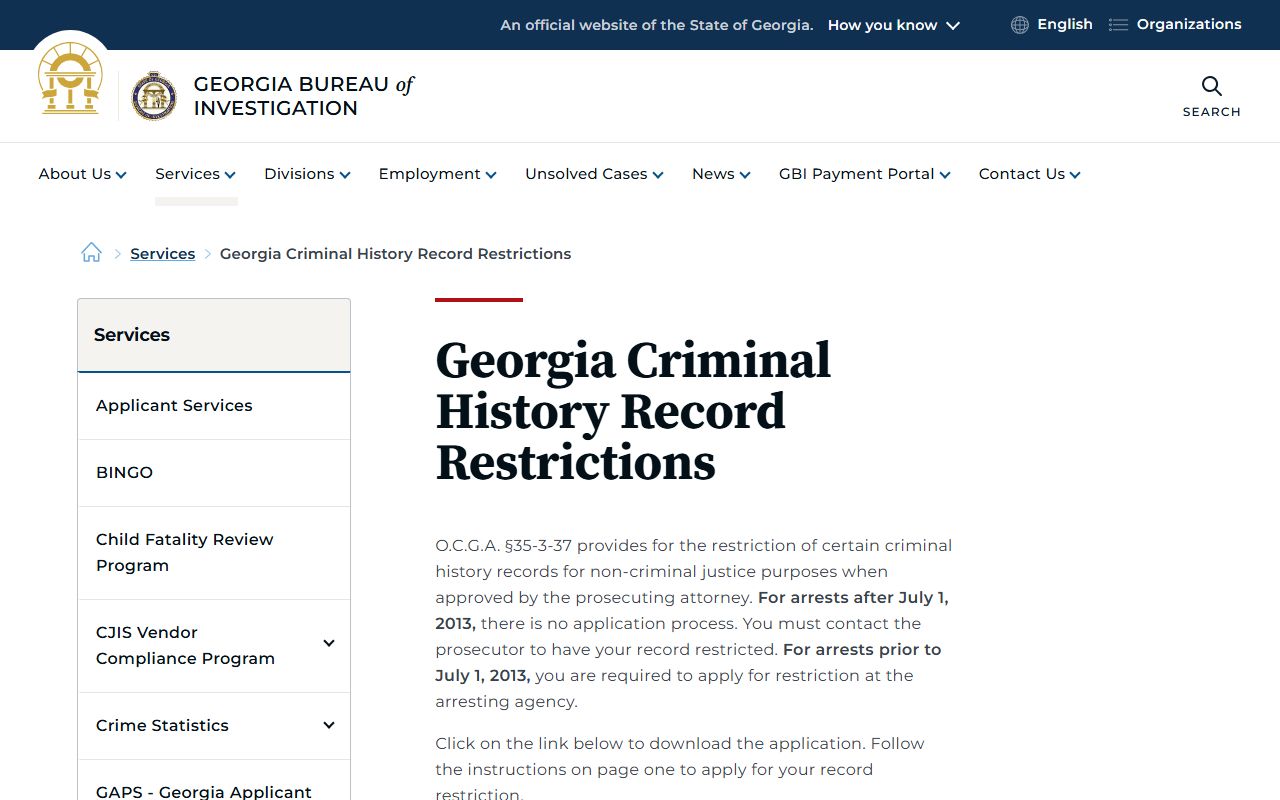
GBI guidance is the correct statewide source for Georgia criminal-history restriction questions, while the clerk remains the source for court-file access.
McIntosh Criminal Record Access Rules
Georgia's Open Records Act and court-access rules support public access to many court records, but criminal court records can still have limits. Uniform Superior Court Rule 21 addresses limitation of access to court files. O.C.G.A. § 35-3-37 governs Georgia criminal-history record restriction. O.C.G.A. § 15-11-40 supports juvenile and child-information confidentiality. The clerk can confirm whether a specific McIntosh County criminal court record is public, redacted, sealed, juvenile/confidential, or only available to parties or attorneys.
Key Authorities:
O.C.G.A. § 50-18-70 supports public access to public records unless an exception applies.
O.C.G.A. § 35-3-37 governs Georgia criminal-history record restriction.
The Georgia Code criminal-history restriction statute is the final successful manifest image source assigned to this criminal-records page.
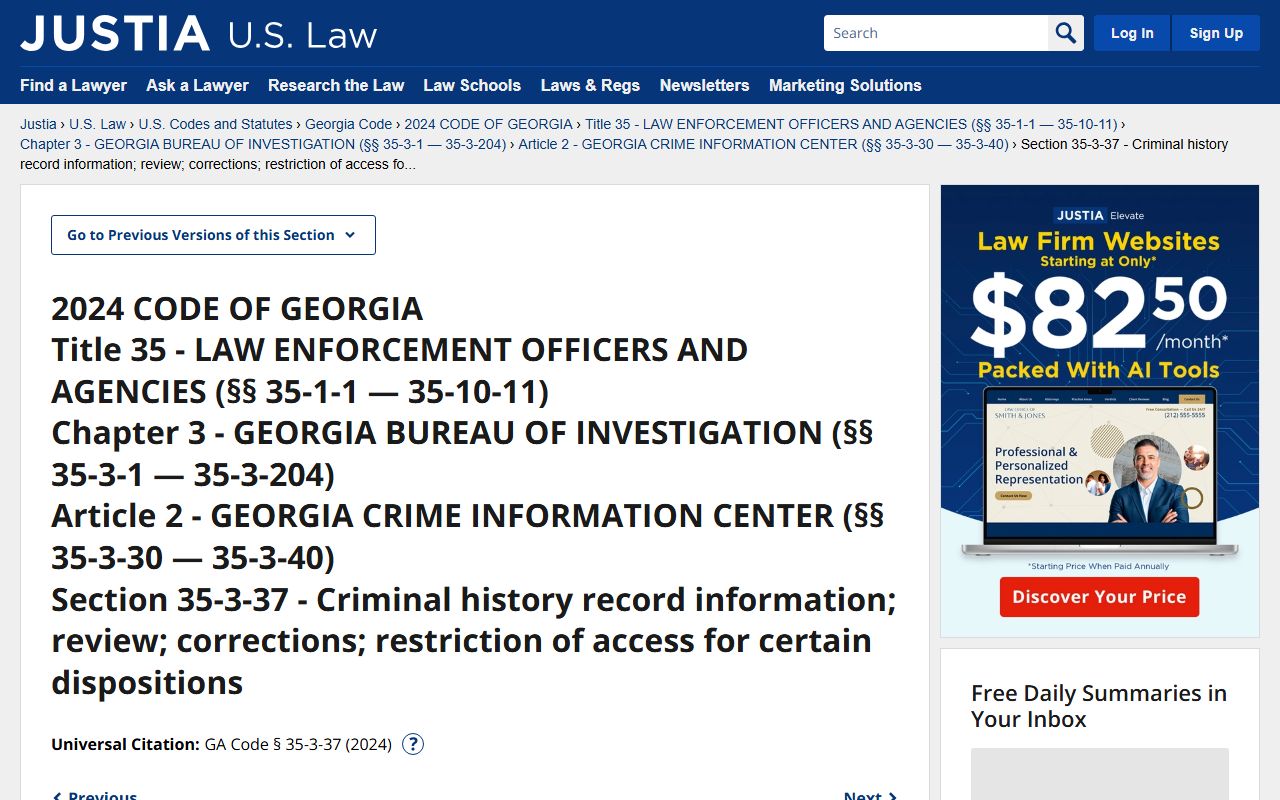
The statute image reinforces why dismissed, dead-docketed, first offender, and other outcomes need case-specific review rather than a generic promise of public removal.
Restricted McIntosh Criminal Court Records
Juvenile criminal-type matters should not be treated as ordinary name-search records. Sealed cases, protected victim information, confidential mental-health material, adoption-related material, and some personal identifiers may be withheld or redacted. Active investigations can also limit what law enforcement releases, even when a later court case becomes public. A person who needs access to a restricted file should ask the clerk what rule, statute, or order controls the record and whether a motion, petition, or court order is required.
Background check use also has limits. Court records can help a person understand a public case, but employment, tenant, credit, insurance, or similar screening may be governed by the Fair Credit Reporting Act and other laws. A criminal court record should be verified with the originating court before relying on it, especially when the charge was dismissed, reduced, restricted, sealed, or tied to a person with a common name.